
Human Resource Development for Sustainable Rural Transformation: Strategies, Policies and Pathways for Viksit Bharat @ 2047
Human Resource Development for Sustainable Rural Transformation: Strategies, Policies and Pathways for Viksit Bharat @ 2047
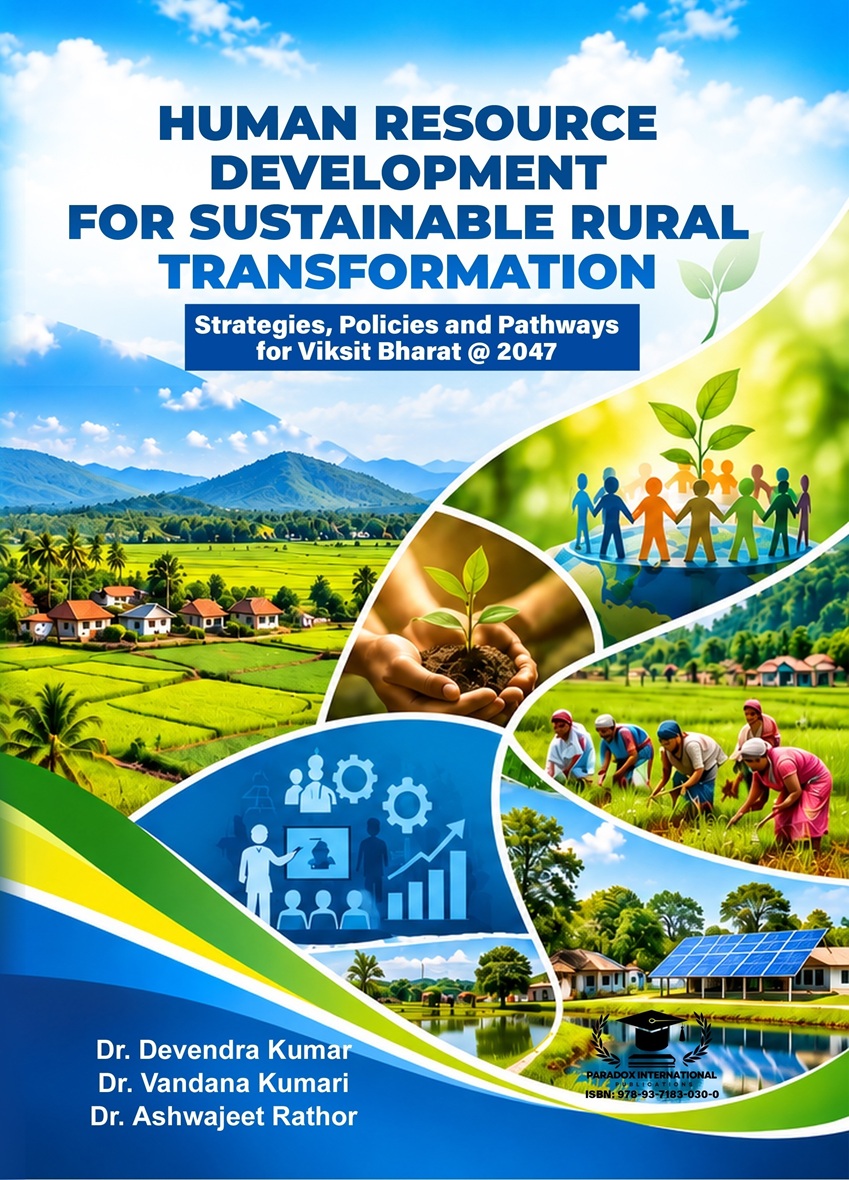
Authors: Dr. Devendra Kumar, Dr. Vandana Kumari and Dr. Ashwajeet Rathor
ISBN: 978-93-7183-030-0
DOI: https://doi.org/10.59646/837
Date of Publication: September 25, 2026
Preface
Human Resource Development (HRD) has emerged as a critical foundation for achieving inclusive, sustainable, and economically resilient rural transformation. As India advances towards the vision of Viksit Bharat @ 2047, the development of rural human capital becomes increasingly important for strengthening livelihoods, improving employability, encouraging entrepreneurship, promoting technological adoption, and building capable local institutions. Human Resource Development for Sustainable Rural Transformation: Strategies, Policies and Pathways for Viksit Bharat @ 2047 presents a comprehensive perspective on how education, skills, employment, digital capabilities, innovation, entrepreneurship, governance, and sustainable development can be integrated to transform rural communities into productive, resilient, and knowledge-driven economic ecosystems. The book begins with the foundations of HRD and rural transformation, examining human capital, sustainable rural development, and the significance of rural India in the long-term national development vision. It subsequently explores rural education, skill development, employability, lifelong learning, workforce transformation, and mechanisms for strengthening the capabilities of rural youth and women. The discussion further extends to rural livelihoods, entrepreneurship, employment generation, Self-Help Groups, Farmer Producer Organizations, cooperatives, and livelihood security, highlighting the importance of creating diversified and sustainable economic opportunities in rural areas. Recognizing the rapid influence of technology, the book addresses digital transformation, digital skills, artificial intelligence, technology-enabled agriculture, rural innovation ecosystems, digital livelihood platforms, and technology-driven HRD and capacity building. Particular attention is also given to inclusive, green, and resilient HRD, with discussions on gender inclusion, youth leadership, green employment, climate resilience, sustainable rural enterprises, social protection, and rural well-being. The final unit connects HRD with rural development policies, Panchayati Raj institutions, Viksit Gram Panchayat planning, institutional capacity building, policy convergence, monitoring and evaluation, financing mechanisms, and strategic pathways towards Viksit Bharat @ 2047. By bringing together conceptual foundations, development strategies, institutional mechanisms, technological dimensions, and policy perspectives, this book provides a structured academic resource for understanding the evolving relationship between human capabilities and rural transformation. It is intended to support students, researchers, academicians, development professionals, policymakers, administrators, rural entrepreneurs, and practitioners seeking a deeper understanding of sustainable rural human resource development and its contribution to India’s long-term developmental aspirations. Ultimately, the book emphasizes that the realization of Viksit Bharat @ 2047 requires not only physical and technological infrastructure but also skilled, empowered, innovative, and resilient rural communities capable of participating meaningfully in India’s economic and social transformation.