
Advanced Studies in Multidisciplinary Research and Innovation (ASMRI)
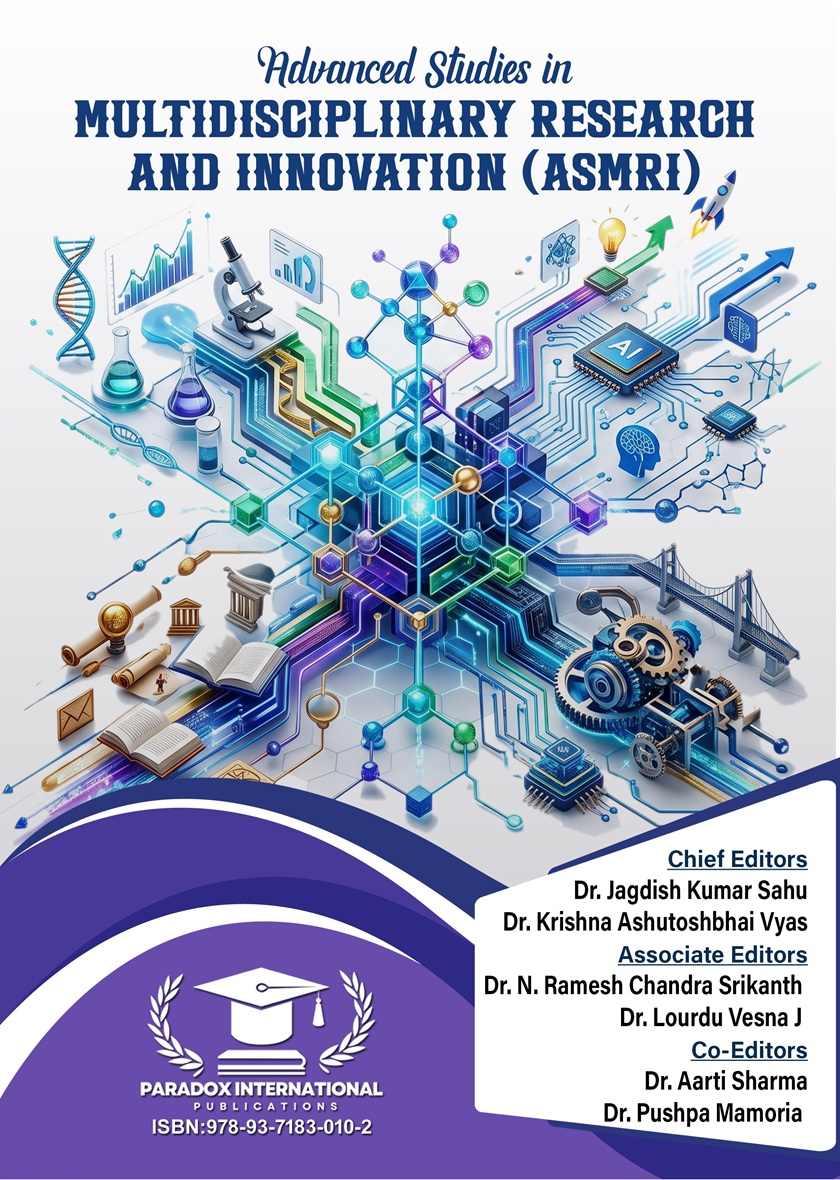
Advanced Studies in Multidisciplinary Research and Innovation (ASMRI)
Chief Editors: Dr. Jagdish Kumar Sahu and Dr. Krishna Ashutoshbhai Vyas
Associate Editors: Dr. N. Ramesh Chandra Srikanth and Dr. Lourdu Vesna J
Co-Editors: Dr. Aarti Sharma and Dr. Pushpa Mamoria
ISBN: 978-93-7183-010-2
DOI: https://doi.org/10.59646/745
Date of Publication: June 29, 2026
Cite this book: Jagdish KS, Krishna AV, NRC Srikanth, Lourdu VJ, Aarti S and Pushpa M, (2026), Advanced Studies in Multidisciplinary Research and Innovation (ASMRI), Paradox International Publications & San International Scientific Publications, ISBN: 978-93-7183-010-2, DOI: https://doi.org/10.59646/745
Chapters and Authors
Chapter 1: Digital Dialects: How Internet Slang Is Reshaping Standard English – Anjana Rajeev T
Chapter 6: Cybersecurity Challenges in Digital Banking Services – Dr. Gunjan Agrawal
Chapter 9: Cybersecurity Challenges and Data Protection in the Digital Era – Dr. Sharon Jude Samuel
Chapter 10: Artificial Intelligence Applications in Modern Banking Systems – Dr. Sunil Adhav
Chapter 18: Hybrid AI–Driven Energy Management Systems for Net-Zero Smart Campuses – Sujatha S
Chapter 22: Green Human Resource Management Practices and Corporate Performance – Dr. Gunjan Agrawal
Chapter 29: Green Banking Practices and Sustainable Financial Development – Dr. Sunil Adhav
Chapter 31: Engineering Nature-Based Solutions for Urban Heat Island Mitigation – Sujatha S
Preface
The rapid advancement of science, technology, management, healthcare, environmental studies, and the social sciences has transformed the way knowledge is generated, shared, and applied. Addressing contemporary global challenges increasingly demands multidisciplinary perspectives that integrate diverse fields of expertise to develop innovative, sustainable, and impactful solutions. Advanced Studies in Multidisciplinary Research and Innovation (ASMRI) has been conceived with this vision, bringing together scholarly contributions that reflect the dynamic nature of modern research and the importance of interdisciplinary collaboration in advancing academic excellence and societal progress.
This edited volume presents a rich collection of research chapters contributed by academicians, researchers, scientists, and professionals from diverse disciplines. The book encompasses a broad spectrum of emerging themes, including artificial intelligence, cybersecurity, digital banking, pharmaceutical and biomedical research, renewable energy, sustainable chemistry, aerospace materials, healthcare innovations, environmental engineering, marketing analytics, linguistics, education, public health, green human resource management, quantum computing, smart campus technologies, and sustainable business practices. Collectively, these contributions demonstrate how interdisciplinary research serves as a catalyst for innovation while addressing real-world problems through evidence-based approaches and technological advancements.
Several chapters explore the transformative influence of digital technologies and artificial intelligence across multiple domains, including drug discovery, banking, higher education, predictive analytics, and customer relationship management. Other contributions emphasize sustainability through green chemistry, renewable energy adoption, carbon capture technologies, photocatalytic water treatment, and nature-based engineering solutions, highlighting the growing global commitment toward environmental stewardship and climate resilience. The volume also provides valuable insights into public health challenges, electronic health records, edible vaccines, chronic disease burden, healthcare accessibility, and pediatric environmental health, reinforcing the significance of research-driven healthcare policies and innovations. The book further enriches multidisciplinary scholarship by examining contemporary issues in language, communication, and society. Studies on digital dialects, code-switching among immigrant communities, and political rhetoric illustrate the evolving relationship between language, identity, technology, and culture in the digital age. Equally significant are the chapters addressing organizational excellence, green entrepreneurship, sustainable financial systems, and innovative management practices, which provide practical perspectives for policymakers, educators, administrators, and industry professionals seeking sustainable growth and institutional effectiveness.
One of the notable strengths of this volume lies in its ability to bridge theoretical foundations with practical applications. The contributors present research findings, analytical discussions, technological innovations, and policy perspectives that not only enhance academic understanding but also provide actionable knowledge for practitioners and decision-makers. By integrating scientific inquiry with emerging technological developments and societal needs, the book offers readers a comprehensive understanding of contemporary multidisciplinary research trends and future directions.
The editors sincerely appreciate the dedication and scholarly efforts of all contributing authors whose valuable research has made this publication possible. We also extend our heartfelt gratitude to the reviewers, editorial board members, and publication team for their constructive suggestions, meticulous evaluation, and unwavering support throughout the preparation of this volume. Their collective commitment has significantly enhanced the academic quality and integrity of this publication.
It is our sincere hope that Advanced Studies in Multidisciplinary Research and Innovation (ASMRI) will serve as a valuable reference for researchers, faculty members, postgraduate students, industry professionals, policymakers, and academic institutions. We believe this volume will inspire further interdisciplinary research, encourage collaborative innovation, and contribute meaningfully to the advancement of knowledge across diverse domains. As research continues to transcend traditional disciplinary boundaries, this book stands as a testament to the power of multidisciplinary thinking in addressing the complex challenges of the twenty-first century and shaping a more innovative, sustainable, and knowledge-driven future.