Modern Human Resource & Organizational Dynamics
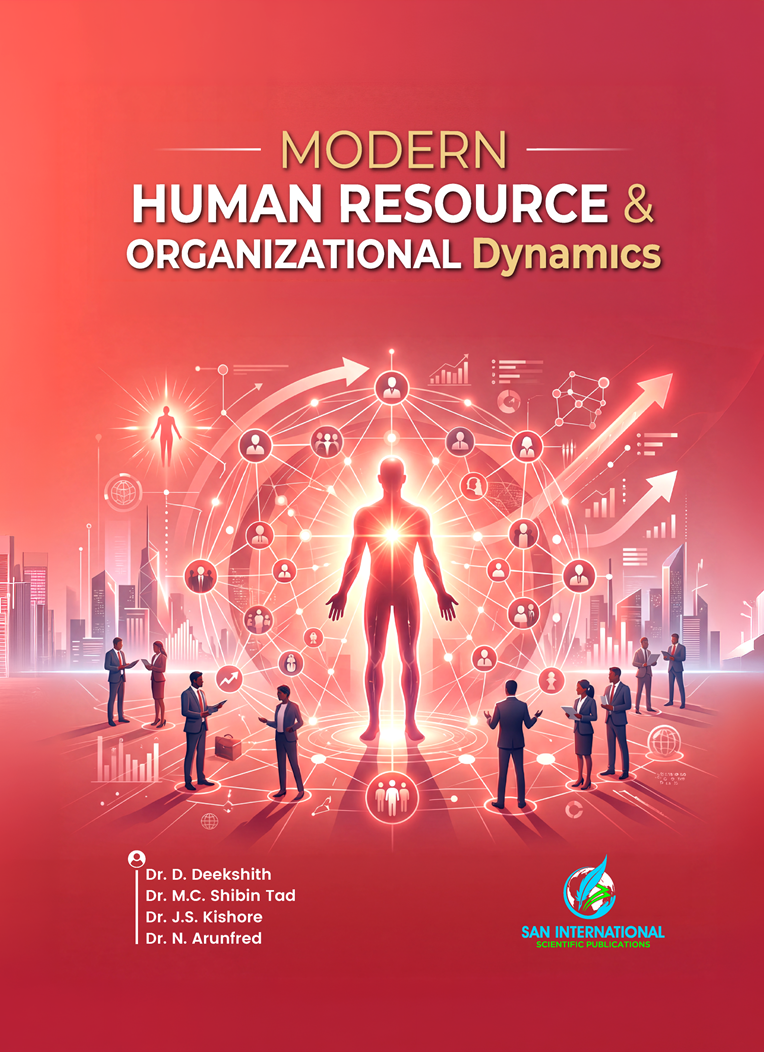
Modern Human Resource & Organizational Dynamics
Editors: Dr. D. Deekshith, Dr. M.C. Shibin Tad, Dr. J.S. Kishore, and Dr. N. Arunfred
ISBN: 978-81-69297-55-4
DOI: https://doi.org/10.59646/722
Date of Publication: May 30, 2026
Cite this book: D. Deekshith, MCS Tad, JS Kishore, and N. Arunfred, (2026), Modern Human Resource & Organizational Dynamics, San International Scientific Publications, ISBN: 978-81-69297-55-4, DOI: https://doi.org/10.59646/722
Chapters and Authors
Chapter 1: The Future of Work: Remote and Hybrid Workplaces – Prof. Kishore J S
Chapter 2: The Role of Emotional Intelligence in Business Leadership – Dr. Inba Saharan J.R
Chapter 3: Talent Management and Employee Engagement in Modern Organizations – Dr. M.C. Shibin Tad
Chapter 4: Diversity and Inclusion in The Workplace – Dr. K. A. Janardhanan
Chapter 5: The Rise of the Gig Economy and Its Implications for Business – Dr. D. Kinslin
Chapter 6: Human Resource Management in A Digital Era – Dr. S. Fenin Samuel
Chapter 7: Global Talent Acquisition and Retention Strategies – Dr. Kavitha Rani. R
Chapter 8: The Future of Corporate Learning and Development – Prof. Jenusha Ananthy Y
Preface
In an era marked by rapid technological transformation, globalization, workforce diversity, and evolving organizational structures, the field of Human Resource Management has emerged as a strategic function that significantly influences organizational success and sustainability. The traditional role of human resources has expanded beyond administrative responsibilities to encompass talent development, leadership cultivation, employee engagement, organizational culture, and workforce innovation. As businesses navigate an increasingly dynamic and competitive environment, understanding the changing nature of work and organizational behavior has become essential for managers, leaders, researchers, and practitioners. The book Modern Human Resource & Organizational Dynamics has been developed to provide comprehensive insights into these contemporary developments and to explore the strategic dimensions of managing people in modern organizations.
This volume brings together scholarly contributions from experienced academicians and professionals who examine critical issues shaping the present and future of human resource management. The opening chapter explores the future of work, focusing on remote and hybrid workplace models that have transformed organizational operations and employee experiences across the globe. As organizations continue to adapt to flexible work arrangements, understanding their opportunities and challenges becomes increasingly important for achieving productivity, collaboration, and employee well-being.
Leadership remains a cornerstone of organizational effectiveness, and this book highlights the growing significance of emotional intelligence in business leadership. By emphasizing self-awareness, empathy, communication, and relationship management, the chapter provides valuable insights into how emotionally intelligent leaders can inspire teams and foster positive workplace cultures. Complementing this discussion are chapters dedicated to talent management and employee engagement, which examine strategies for attracting, developing, motivating, and retaining high-performing employees in an increasingly competitive talent marketplace.
The book also addresses the importance of diversity and inclusion as essential drivers of innovation, creativity, and organizational performance. In a globalized business environment, organizations must cultivate inclusive cultures that value diverse perspectives and promote equitable opportunities for all employees. Alongside this, the rise of the gig economy is explored as a transformative force that is reshaping employment relationships, workforce structures, and business models. The analysis provides readers with a deeper understanding of the opportunities and challenges associated with freelance, contract-based, and platform-driven work arrangements.
Digital transformation has significantly altered the way human resource functions are managed and delivered. Accordingly, the book examines Human Resource Management in the digital era, highlighting the impact of emerging technologies such as artificial intelligence, analytics, cloud-based systems, and automation on recruitment, performance management, learning, and employee engagement. The discussion further extends to global talent acquisition and retention strategies, recognizing the growing need for organizations to compete for skilled professionals in an interconnected international labor market.
The final chapter explores the future of corporate learning and development, emphasizing continuous learning, reskilling, upskilling, and the adoption of innovative learning technologies. As organizations face constant disruption and change, fostering a culture of lifelong learning becomes a critical factor in maintaining organizational agility and competitiveness.
We express our sincere gratitude to all contributing authors whose expertise and scholarly dedication have made this publication possible. Their thoughtful contributions provide readers with diverse perspectives on the evolving world of human resource management and organizational behavior. We also acknowledge the support of academic institutions, colleagues, and reviewers who have contributed to the successful completion of this work. It is our hope that Modern Human Resource & Organizational Dynamics will serve as a valuable resource for students, educators, researchers, HR professionals, business leaders, and policymakers seeking to understand and effectively manage the complexities of the modern workforce and organizational environment.