
Exchange Factor Biology in Cancer Insights from RAPGEF3 and Lung Carcinogenesis
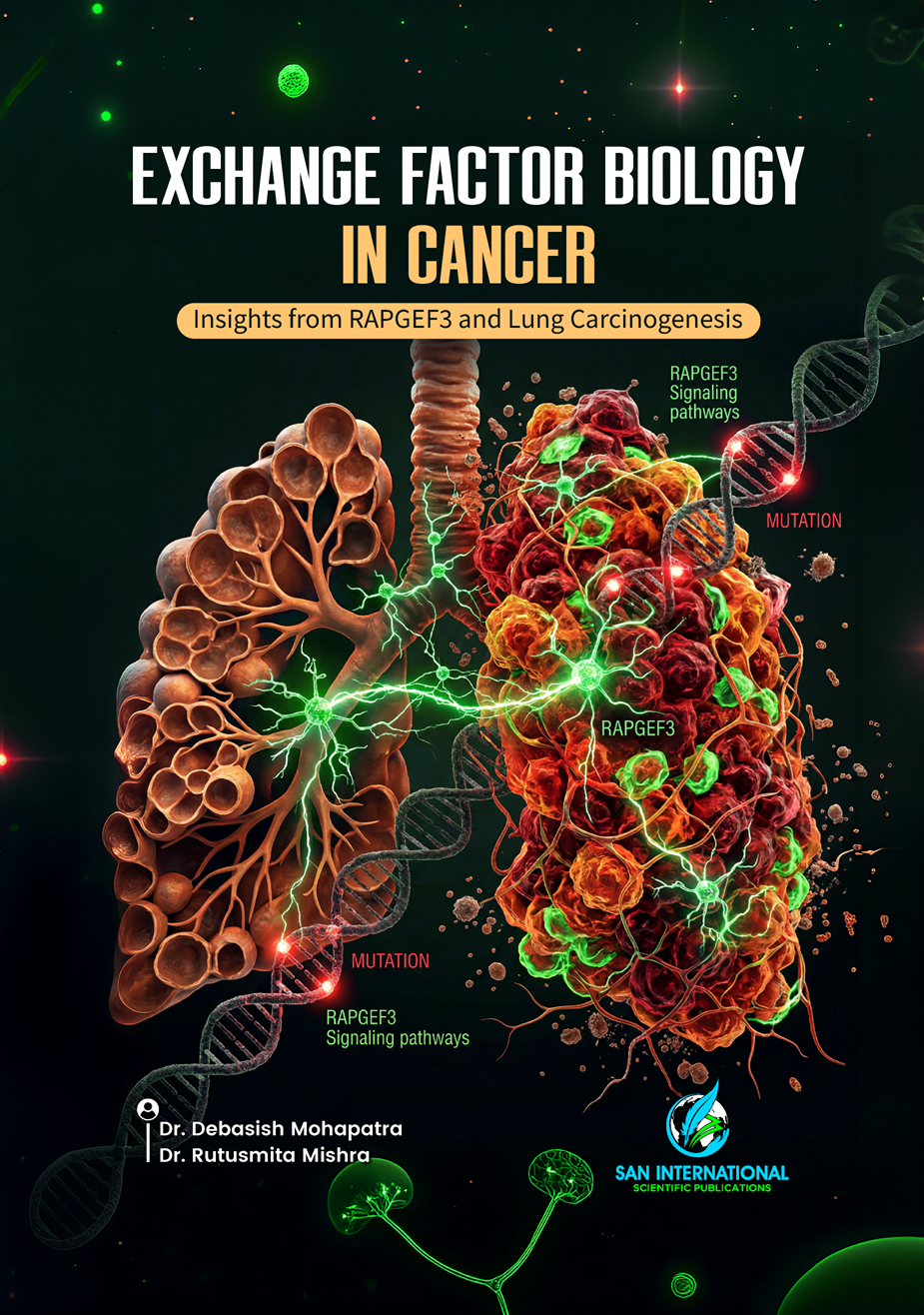
Exchange Factor Biology in Cancer Insights from RAPGEF3 and Lung Carcinogenesis
Authors: Dr. Debasish Mohapatra, & Dr. Rutusmita Mishra
ISBN: 978-81-69297-77-6
DOI: https://doi.org/10.59646/681
Date of Publication: May 13, 2026
Cite this book: Debasish M, & Rutusmita M, (2026), Exchange Factor Biology in Cancer Insights from RAPGEF3 and Lung Carcinogenesis, San International Scientific Publications, ISBN: 978-81-69297-77-6, DOI: https://doi.org/10.59646/681
Preface
The remarkable progress achieved in molecular oncology and cancer genomics over the past decades has transformed our understanding of the intricate biological mechanisms governing tumor initiation, progression, metastasis, and therapeutic resistance. Among the many signaling molecules implicated in carcinogenesis, guanine nucleotide exchange factors (GEFs) have emerged as critical regulators of intracellular signaling pathways that influence cell proliferation, migration, apoptosis, and cytoskeletal remodeling. RAPGEF3, also known as EPAC1, has attracted increasing scientific attention due to its significant role in cyclic AMP-mediated signaling and its growing association with multiple human malignancies, particularly lung cancer. Lung cancer remains one of the leading causes of cancer-related mortality worldwide, largely owing to delayed diagnosis, aggressive metastatic behavior, and limited effectiveness of conventional therapeutic strategies in advanced stages. Consequently, identifying novel molecular targets and understanding their mechanistic involvement in lung tumorigenesis are essential for the development of innovative diagnostic biomarkers and precision-based therapeutic interventions. This book, Exchange Factor Biology in Cancer: Insights from RAPGEF3 and Lung Carcinogenesis, presents a comprehensive exploration of RAPGEF3 biology in the context of lung cancer through a multidisciplinary integration of molecular oncology, computational biology, and translational cancer research. The chapters systematically examine the biological significance of RAPGEF3, the molecular mechanisms regulating its expression and activity, and its contribution to lung cancer progression and metastatic pathways. Furthermore, the book highlights advanced computational oncology approaches, including bioinformatics-based data collection, literature interpretation, onco-print analysis using the cBioPortal database, and effective drug candidate screening for therapeutic applications. Special emphasis is placed on deciphering the subcellular localization, expression patterns, tissue distribution, mutational landscape, and gene-clustering characteristics of RAPGEF3 in lung carcinoma models. The investigation also provides valuable insights into the potential of MI774 as a promising chemotherapeutic candidate targeting lung cancer pathways associated with RAPGEF3 activity. By combining experimental observations with biocomputational analyses, this work aims to bridge the gap between fundamental cancer biology and clinical translational research, thereby contributing to the expanding knowledge of exchange factor-mediated oncogenic signaling. It is hoped that this book will serve as a valuable resource for researchers, academicians, clinicians, and students engaged in cancer biology, molecular medicine, pharmacology, and computational oncology, while also inspiring future investigations into novel therapeutic targets for lung cancer management.