
Electronics 4.0: Merging AI, IoT, and Cyber-Physical Systems
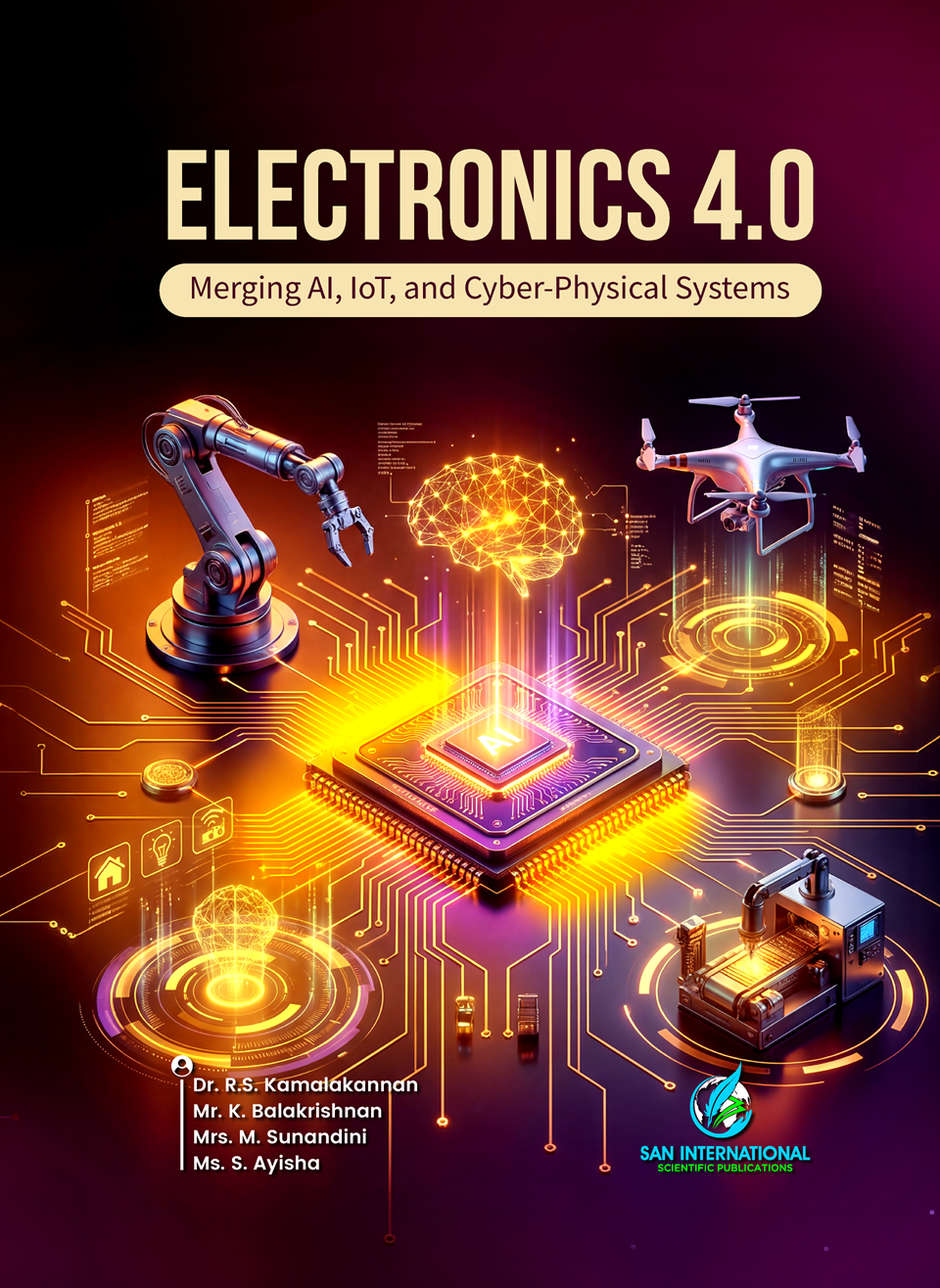
Electronics 4.0: Merging AI, IoT, and Cyber-Physical Systems
Authors: Dr. R.S. Kamalakannan, Mr. K. Balakrishnan, Mrs. M. Sunandini, and Ms. S. Ayisha
ISBN: 978-81-69297-74-5
DOI: https://doi.org/10.59646/655
Date of Publication: April 16, 2026
Cite this book: R.S. Kamalakannan, K. Balakrishnan, M. Sunandini, and S. Ayisha, (2026), Electronics 4.0: Merging AI, IoT, and Cyber-Physical Systems, San International Scientific Publications, ISBN: 978-81-69297-74-5, DOI: https://doi.org/10.59646/655
Preface
Electronics 4.0 represents a transformative shift in the way electronic systems are conceived, designed, and deployed, driven by the seamless integration of Artificial Intelligence (AI), the Internet of Things (IoT), and Cyber-Physical Systems (CPS). This evolution moves beyond traditional electronics toward intelligent, interconnected, and adaptive systems capable of real-time decision-making and autonomous operation. As industries transition into the era of smart manufacturing, connected infrastructure, and data-driven innovation, the role of electronics has expanded from passive functionality to active intelligence embedded within devices and networks. This text aims to provide a comprehensive understanding of the foundational principles, enabling technologies, and advanced applications that define Electronics 4.0. By exploring the convergence of sensing, computation, communication, and control, it highlights how modern electronic systems interact dynamically with physical environments while leveraging digital intelligence. The structured progression across units—from core concepts and IoT architectures to AI-driven design, CPS integration, embedded systems, and cybersecurity—equips learners with both theoretical insights and practical perspectives. Emphasis is also placed on interdisciplinary thinking, real-world case studies, and emerging trends that shape the future of electronics. Ultimately, this work aspires to prepare students, engineers, and researchers to innovate and contribute effectively in a rapidly evolving technological landscape where intelligent electronics play a central role in shaping sustainable, efficient, and resilient systems.