Commerce 5.0: AI, Ethics, and the Future of Business
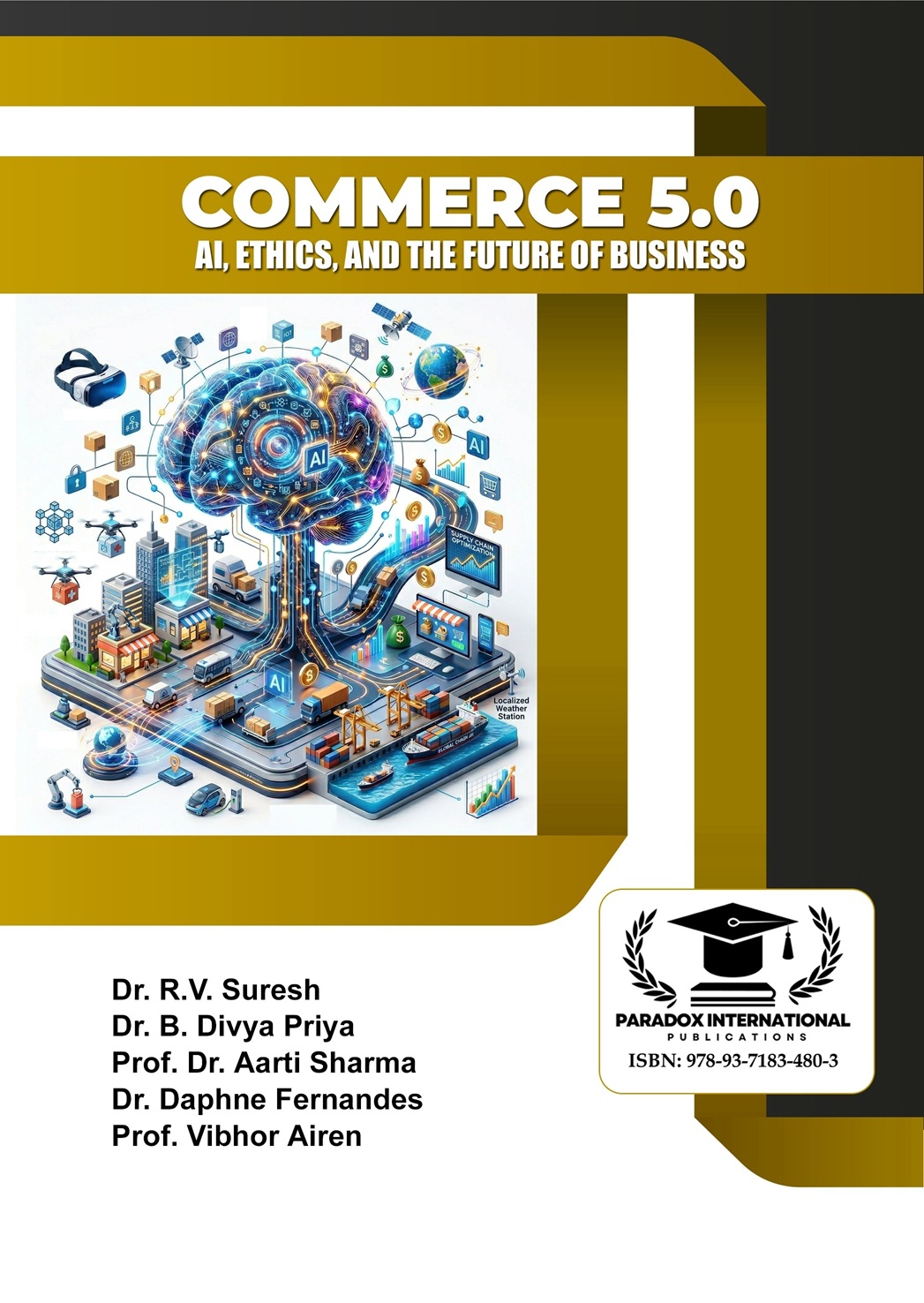
Commerce 5.0: AI, Ethics, and the Future of Business
Authors: Dr. R.V. Suresh, Dr. B. Divya Priya, Prof. Dr. Aarti Sharma, Dr. Daphne Fernandes, and Prof. Vibhor Airen
ISBN: 978-93-7183-480-3
DOI: https://doi.org/10.59646/638
Date of Publication: March 27, 2026
Cite this book: R.V. Suresh, B.D. Priya, A. Sharma, D. Fernandes, and V. Airen, (2026), Commerce 5.0: AI, Ethics, and the Future of Business, Paradox International Publications & San International Scientific Publications, ISBN: 978-93-7183-480-3, DOI: https://doi.org/10.59646/638
Preface
The world of commerce is undergoing a profound transformation, driven by rapid technological advancements and the growing integration of artificial intelligence (AI) into business processes. We are entering an era often described as Commerce 5.0—a phase that moves beyond automation and efficiency toward a more human-centered, ethical, and intelligent business ecosystem. This transformation reflects the broader shift from Industry 4.0 to Industry 5.0, where the focus is not only on technological innovation but also on aligning it with human values, sustainability, and societal well-being.
Artificial intelligence has already redefined how organizations operate—enhancing decision-making, enabling predictive analytics, personalizing customer experiences, and optimizing supply chains. Businesses today rely heavily on AI to remain competitive in an increasingly dynamic and data-driven environment. However, alongside these opportunities arise critical questions concerning ethics, accountability, transparency, and trust. The integration of AI into commerce demands not only technical expertise but also a deep understanding of its societal implications. Commerce 5.0 emphasizes a shift from purely profit-driven models to value-driven enterprises that prioritize stakeholders, inclusivity, and long-term sustainability. In this new paradigm, ethical considerations are not optional but essential. Issues such as data privacy, algorithmic bias, responsible innovation, and digital governance must be addressed to ensure that technological progress benefits humanity as a whole. As scholars have noted, the pervasive presence of digital technologies has created a new chapter in human history, requiring thoughtful engagement with both its promises and challenges.
This textbook aims to provide a comprehensive understanding of the intersection between AI, ethics, and modern business practices. It is designed for students, researchers, and professionals who seek to explore how emerging technologies are reshaping commerce and how ethical frameworks can guide responsible decision-making. The chapters cover foundational concepts of AI in business, ethical theories and applications, real-world case studies, regulatory perspectives, and future trends shaping global markets.
In preparing this book, the authors have endeavoured to strike a balance between theory and practice. Real-world examples, case analyses, and critical reflections are included to encourage deeper engagement and to foster analytical thinking. The goal is not only to inform but also to inspire readers to become responsible leaders and innovators in the evolving business landscape. As we stand at the crossroads of technological advancement and ethical responsibility, Commerce 5.0 offers an opportunity to redefine the purpose of business. It challenges us to envision a future where technology serves humanity, businesses act with integrity, and innovation contributes to a more equitable and sustainable world.