Modern Public Administration: Theory, Practice and Reform
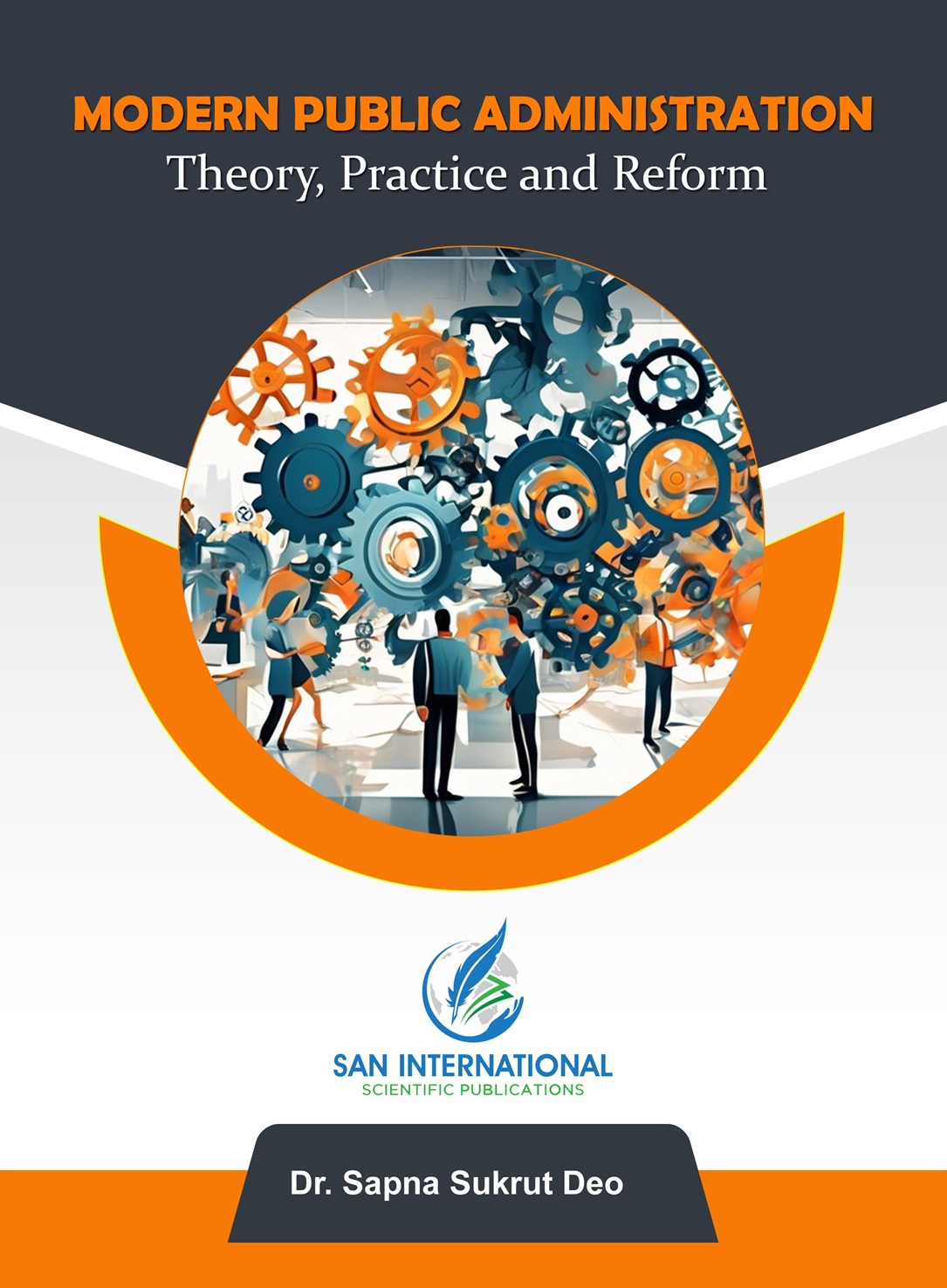
Modern Public Administration: Theory, Practice and Reform
Author: Dr. Sapna Sukrut Deo
ISBN: 978-81-999695-7-5
DOI: https://doi.org/10.59646/616
Date of Publication: March 10, 2026
Cite this book: Sapna S.D., (2026), Modern Public Administration: Theory, Practice and Reform, San International Scientific Publications, ISBN: 978-81-999695-7-5, DOI: https://doi.org/10.59646/616.
Preface
The Public administration plays a crucial role in shaping governance, implementing public policies, and delivering services that affect the everyday lives of citizens. In an era characterized by rapid social change, technological advancement, and increasing public expectations, understanding the theories, structures, and practices of public administration has become more important than ever. The book Modern Public Administration: Theory, Practice and Reform is designed to provide a comprehensive and systematic introduction to the evolving field of public administration by bridging classical theoretical foundations with contemporary administrative practices and reform initiatives. The text explores the meaning, nature, and scope of public administration, tracing its intellectual development from classical administrative theories to modern and post–New Public Management perspectives. It examines how administrative thought has evolved through contributions from scholars such as Taylor, Fayol, Weber, Mayo, and Simon, while also engaging with contemporary approaches including systems theory, New Public Administration, New Public Management, and the New Public Service paradigm. In addition to theoretical perspectives, the book places strong emphasis on practical aspects of administration, including organizational structures, personnel management, financial administration, and public budgeting. It further examines the processes of public policy formulation, decision-making, and policy implementation, highlighting the role of administrative institutions in addressing complex governance challenges. Each unit of the book is structured to present key concepts, analytical frameworks, and real-world administrative issues in a clear and coherent manner, enabling students and readers to develop both conceptual understanding and practical insights. The objective of this work is not only to introduce the academic foundations of public administration but also to encourage critical thinking about administrative reforms, ethical governance, and the evolving role of the state in modern societies. By integrating theoretical discussions with contemporary governance challenges, this book seeks to serve as a valuable resource for students, researchers, and practitioners interested in understanding how public administration contributes to effective governance, democratic accountability, and sustainable public sector reform.