Personalized Learning at Scale: Designing AI Systems that Understand Every Student
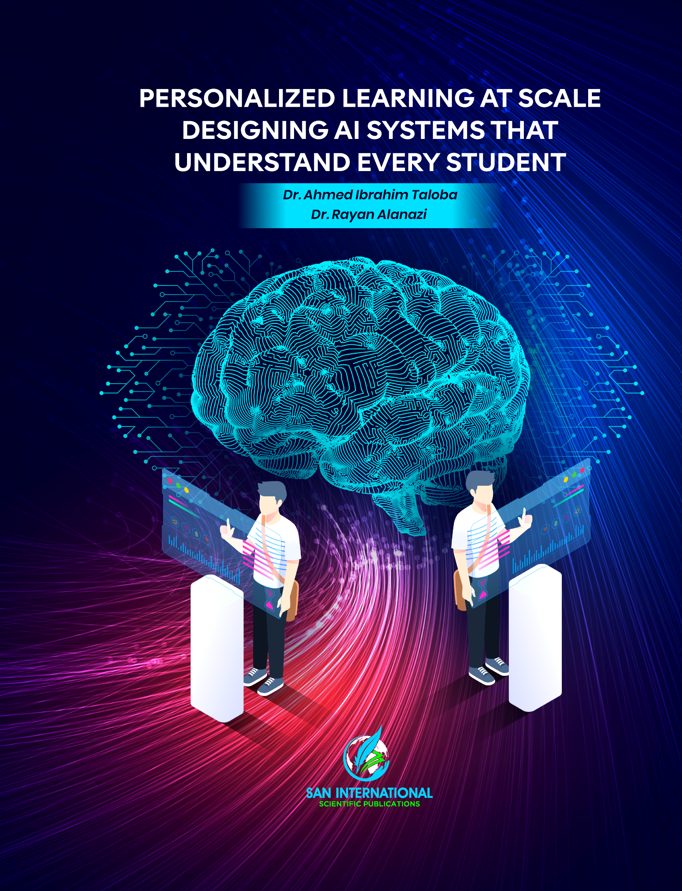
Personalized Learning at Scale: Designing AI Systems that Understand Every Student
Authors: Dr. Ahmed Ibrahim Taloba and Dr. Rayan Alanazi
ISBN: 978-81-997164-0-7
DOI: https://doi.org/10.59646/577
Date of Publication: January 19, 2026
Preface
Education has always aspired to serve every learner, yet for centuries it has been constrained by scale. Classrooms, curricula, assessments, and institutional structures were designed for efficiency rather than individuality. While these systems succeeded in expanding access to education, they often did so at the cost of personalization—treating learners as cohorts rather than as complex individuals with unique abilities, motivations, contexts, and aspirations. In an era defined by rapid technological change, growing diversity in learner populations, and increasing demands for lifelong learning, this tension between scale and personalization has become one of the most pressing challenges in global education. Personalized Learning at Scale: Designing AI Systems that Understand Every Student emerges at this critical juncture. This book is written with a clear conviction: that advances in artificial intelligence (AI), data science, and learning sciences now make it possible to reconcile personalization with scale—not by replacing teachers or standardizing learners further, but by designing intelligent systems that can meaningfully understand, support, and augment human-centered education. The goal is not merely technological innovation, but educational transformation grounded in equity, ethics, and pedagogical integrity.
The concept of personalized learning is not new. Educators have long recognized that students differ in prior knowledge, learning pace, cognitive styles, emotional needs, and socio-cultural backgrounds. Master teachers intuitively adapt instruction—offering additional support to some learners, enrichment to others, and alternative explanations when understanding falters. However, such responsiveness becomes increasingly difficult as class sizes grow, curricula become standardized, and accountability pressures intensify. The result is a system that often optimizes for the “average” learner, leaving many students disengaged, underserved, or misunderstood. Artificial intelligence offers a powerful, though not uncomplicated, response to this challenge. When thoughtfully designed, AI systems can analyze large volumes of learner data, detect patterns invisible to the human eye, and generate insights in real time. They can recommend personalized content, adapt learning pathways, provide timely feedback, and surface actionable information for educators. Yet technology alone is not a solution. Poorly designed systems risk amplifying bias, reducing learners to data points, or prioritizing efficiency over human development. This book therefore takes a balanced and critical approach—one that situates AI within broader educational, ethical, and social contexts.
The structure of the book reflects this philosophy. Part 1, Foundations of Personalized Learning, establishes the conceptual and practical grounding necessary to understand why personalization matters and how AI can enable it. Chapter 1 examines the limitations of traditional education systems, including rigid curricula, one-size-fits-all instruction, and assessment practices that often fail to capture the full spectrum of learner growth. It also explores the documented benefits of tailored learning experiences, from improved academic outcomes to enhanced motivation and learner agency. Chapter 2 then introduces AI-driven personalization, demystifying core concepts such as adaptive learning systems, learner modeling, recommendation engines, and feedback loops. Rather than focusing solely on algorithms, this chapter emphasizes the pedagogical principles that should guide technological design.
Part 2, Designing AI Systems for Personalization, moves from theory to architecture and design. Chapter 3 delves into student data—the lifeblood of AI-powered personalization—examining academic, behavioral, and socio-emotional data, as well as the challenges of data quality, privacy, and interpretation. It highlights how data, when used responsibly, can offer deep insights into learning processes rather than merely measuring performance. Chapter 4 focuses on building adaptive learning pathways, exploring how algorithms can personalize content sequencing, pacing, and modality while remaining aligned with curricular goals. Real-world examples illustrate both the promise and the complexity of adaptive platforms. Chapter 5 addresses student engagement and motivation, recognizing that personalization is ineffective if learners are not emotionally and cognitively invested. Through discussions of gamification, nudges, feedback mechanisms, and self-regulated learning, this chapter emphasizes the human dimensions of engagement that AI must support rather than supplant.
Part 3, Implementation and Scale, confronts the realities of deploying AI systems in educational institutions. Chapter 6 examines practical considerations such as integration with existing learning management systems, interoperability, infrastructure constraints, and professional development for educators. It underscores that successful implementation depends as much on organizational culture and teacher trust as on technical robustness. Chapter 7 focuses on equity and accessibility, arguing that personalized learning must be inclusive by design. This chapter critically examines algorithmic bias, digital divides, accessibility for learners with disabilities, and culturally responsive AI design, offering strategies to ensure that personalization benefits all students rather than a privileged few. Chapter 8 turns to measurement and iteration, discussing how institutions can evaluate the impact of AI systems using meaningful metrics related to engagement, learning outcomes, and well-being, and how continuous improvement can be embedded into system design.
Finally, Part 4, Future Directions, looks beyond current implementations to the evolving landscape of AI and education. Chapter 9 explores emerging trends such as predictive analytics, multimodal learning environments, and advances in natural language and affective computing, considering how these developments may further deepen personalization. Chapter 10 addresses ethical considerations and the indispensable human touch in education. It reaffirms that AI should augment, not replace, the relational core of teaching and learning. By examining issues of transparency, accountability, trust, and the teacher–student relationship, this chapter offers a vision of AI as a supportive partner in education rather than an autonomous authority.
This book is intended for a broad audience: educators seeking to understand and apply AI insights in their practice; researchers exploring the intersection of learning sciences and artificial intelligence; policymakers and institutional leaders responsible for technology adoption; and technologists designing educational systems with real-world impact. While the book engages deeply with technical and theoretical concepts, it is written with accessibility in mind, emphasizing clarity, real-world relevance, and ethical reflection. At its heart, Personalized Learning at Scale is an invitation—to rethink how education systems can honor individual learners while serving millions, to design AI systems that are not only intelligent but humane, and to envision a future in which every student is seen, understood, and supported. If education is to prepare learners for an uncertain and rapidly changing world, it must first learn to recognize them as individuals. This book is a step toward that future.