
AI-Enhanced Pedagogy: Digital Assessment, Data Analytics & Educational Management
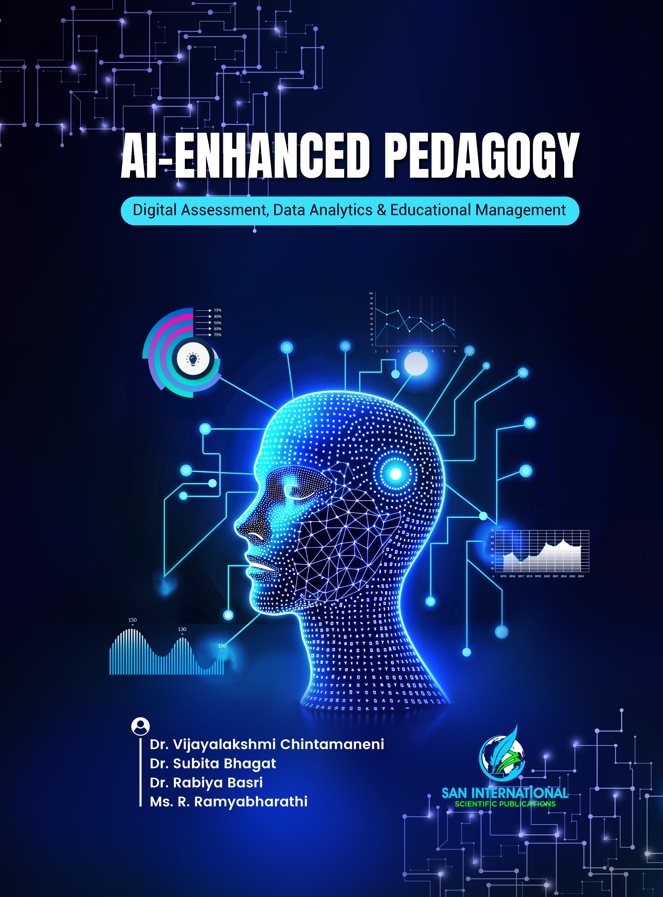
AI-Enhanced Pedagogy: Digital Assessment, Data Analytics & Educational Management
Authors: Dr. Vijayalakshmi Chintamaneni, Dr. Subita Bhagat, Dr. Rabiya Basri, and Ms. R. Ramyabharathi
ISBN: 978-81-997164-4-5
DOI: https://doi.org/10.59646/558
Date of Publication: January 12, 2026
About the Book:
AI-Enhanced Pedagogy: Digital Assessment, Data Analytics & Educational Management is a comprehensive academic contribution that responds to the rapidly evolving digital transformation of education in India and globally. As educational systems transition from conventional classroom-centric models to technology-enabled, data-driven, and learner-centered ecosystems, this book seeks to provide a rigorous conceptual, pedagogical, and managerial framework for understanding and implementing digital and AI-enabled educational practices. Grounded in national initiatives such as the Digital India mission, the National Education Policy (NEP) 2020, and the National Digital Education Architecture (NDEAR), the text situates emerging technologies within India’s unique socio-economic, linguistic, and institutional contexts.
The book systematically explores the evolution of digital learning, virtual learning environments, and online education platforms, followed by an in-depth examination of artificial intelligence and machine learning applications in adaptive learning, automated assessment, student analytics, and inclusive education. It further addresses contemporary instructional design models, digital pedagogy principles, and immersive learning technologies such as gamification, AR/VR, and virtual laboratories, highlighting the changing role of teachers as facilitators and designers of meaningful learning experiences. A dedicated focus on digital assessment, big data analytics, blockchain-based certification, and educational management systems underscores the growing importance of evidence-based decision-making, institutional planning, and policy governance.
Equally important, the book foregrounds issues of digital equity, accessibility, privacy, cybersecurity, and ethical governance, with special attention to rural–urban divides, gender gaps, and the educational needs of differently-abled learners. Through policy analysis, practical frameworks, and illustrative case studies—including national platforms and examination reforms—the book aims to bridge theory and practice. Intended for educators, administrators, policy makers, researchers, and postgraduate learners, this volume aspires to serve as both a foundational text and a strategic guide for building inclusive, resilient, and AI-enabled education systems that are responsive to the demands of the 21st-century digital society.