
Sustainable Culinary Practices: Ethics, Innovation, and Gastronomy
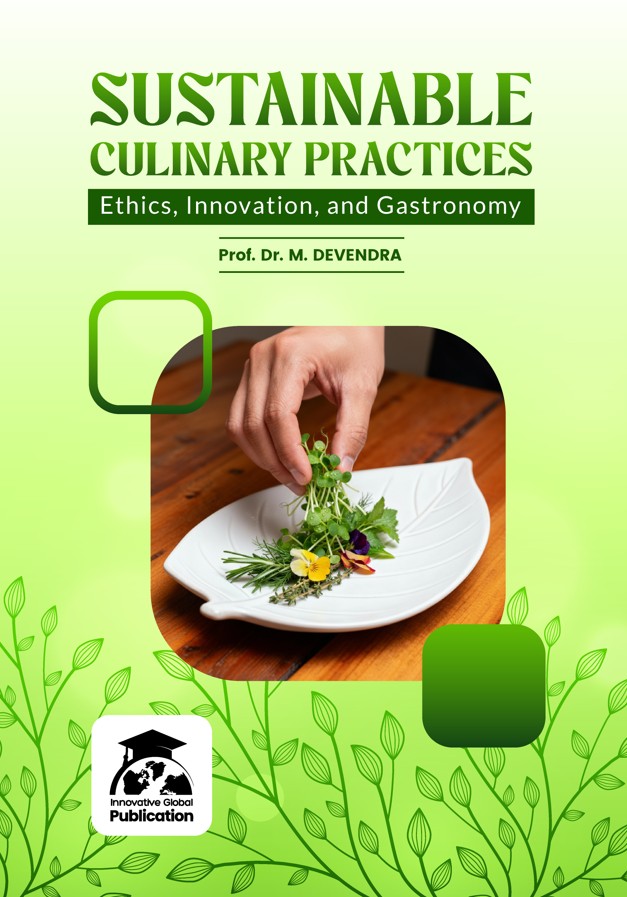
Sustainable Culinary Practices: Ethics, Innovation, and Gastronomy
Author: Prof. Dr. M. Devendra
ISBN: 978-81-994205-0-2
DOI: https://doi.org/10.59646/490
Date of Publication: October 11, 2025
About the Book:
The global food system today stands at a critical juncture. With rising concerns over climate change, biodiversity loss, food insecurity, and ethical dilemmas surrounding production and consumption, the role of culinary professionals has extended far beyond the kitchen. Chefs, gastronomes, and food practitioners are no longer only creators of flavor and culture; they are active participants in shaping sustainable futures. This book, Sustainable Culinary Practices: Ethics, Innovation, and Gastronomy, is an attempt to address this evolving responsibility by bringing together ethical considerations, innovative practices, and cultural dimensions of gastronomy into a comprehensive academic framework.
As a single author, my intention in writing this volume is to present a holistic vision of sustainability in the culinary domain. The book explores how traditions, technologies, and innovations intersect to create pathways toward food systems that are not only environmentally responsible but also socially just and culturally inclusive. From historical roots of sustainable practices to contemporary debates about alternative proteins and lab-grown food, from ethical sourcing to circular gastronomy, the discussion spans the multiple layers through which food engages with ecology, economy, and society.
The structure of the book is designed to provide a progression of thought. The early units introduce foundational concepts—sustainability frameworks, food ethics, and sourcing principles—while subsequent chapters expand into practical innovations such as low-waste kitchens, renewable energy in food operations, and sustainable menu design. The text also recognizes the deeply cultural dimensions of gastronomy, highlighting how culinary traditions, storytelling, and diplomacy can serve as instruments of sustainability and resilience. Special attention is given to the intersection of nutrition, health, and sustainability, acknowledging the urgent need for diets that balance human well-being with ecological preservation.
A distinctive aspect of this work is its emphasis on the future. By examining technological frontiers—such as AI-driven kitchens, insect proteins, and lab-grown meat—alongside indigenous knowledge systems, the book invites readers to envision possibilities where ethics, innovation, and gastronomy converge. The closing discussions emphasize advocacy, education, and global food resilience, underscoring that sustainable culinary practices are not isolated endeavors but collective commitments.
This book is written for a broad academic audience—students, researchers, culinary professionals, policy makers, and sustainability advocates. My hope is that it serves as both a theoretical resource and a practical guide, inspiring food professionals to embed sustainability into everyday practices and encouraging scholars to further this important dialogue.
Ultimately, sustainability in gastronomy is not a fixed goal but a journey. It is about rethinking how we grow, prepare, serve, and share food in ways that honor ecosystems, respect cultural identities, and safeguard the future of our planet. If this work can contribute even in a small measure to advancing that vision, it will have fulfilled its purpose.