
Digital Diets: Harnessing AI for Diabetes Prevention Through Food Habits
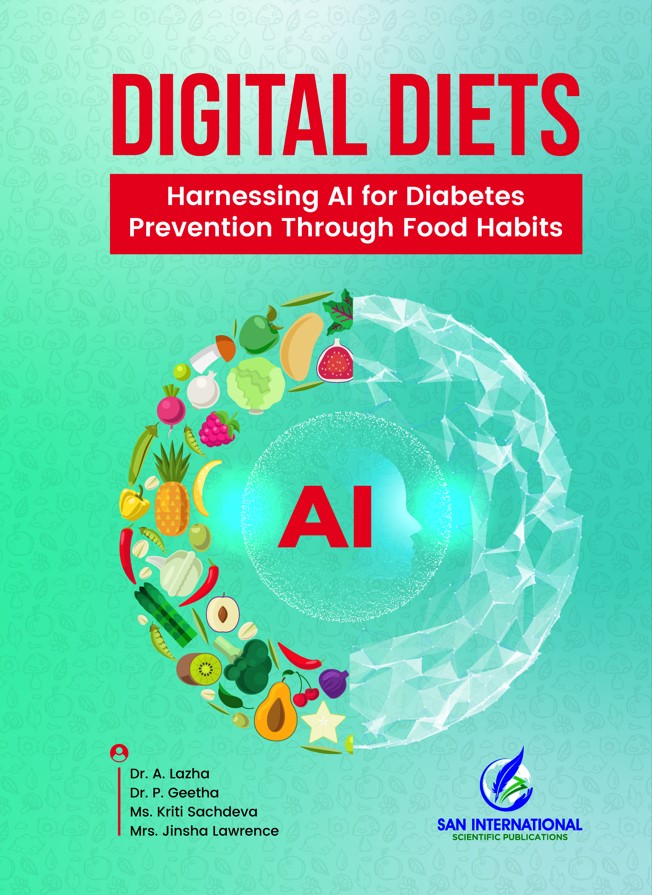
Digital Diets: Harnessing AI for Diabetes Prevention Through Food Habits
Authors: Dr. A. Lazha, Dr. P. Geetha, Ms. Kriti Sachdeva and Mrs. Jinsha Lawrence
ISBN: 978-81-993810-3-2
DOI: https://doi.org/10.59646/464
Date of Publication: September 25, 2025
Digital Diets: Harnessing AI for Diabetes Prevention Through Food Habits is an insightful exploration of how artificial intelligence (AI) is revolutionizing diabetes prevention and management through personalized nutrition and digital lifestyle interventions. The book begins by providing a deep understanding of diabetes, including its global prevalence, underlying mechanisms of insulin resistance, and distinctions among Type 1, Type 2, and Gestational Diabetes Mellitus. It analyzes how rapid urbanization, changing food habits, and socioeconomic factors contribute to the global diabetes epidemic while emphasizing the pivotal role of nutrition and glycemic control in prevention. The concept of “digital diets” is introduced as a fusion of nutritional science and AI-driven technology, explaining how AI, through tools like machine learning and data analytics, is transforming healthcare by enabling early detection, risk prediction, and personalized dietary management. Readers are guided through the evolution of AI-powered dietary tools, from food tracking systems to intelligent nutritional platforms that integrate data from wearables, food logs, and biometric sensors to create individualized meal recommendations. The book also delves into AI-based food recognition algorithms, nutrient estimation, and portion analysis—particularly within the diverse and complex context of Indian cuisine—while addressing the technical challenges of food identification and database limitations. It further explores the realm of personalized nutrition, demonstrating how AI can tailor diet plans using genetic, biometric, and environmental data, supported by case studies on customized meal optimization for diabetes risk reduction. Machine learning models for diabetes risk prediction are discussed in depth, covering techniques like regression and classification, model evaluation, and predictive analytics to support healthcare decision-making. The book then examines the intricate relationship between food habits and blood sugar regulation, explaining how macronutrients, glycemic index, dietary fiber, and hydration influence glucose levels and how AI can help manage cravings and suggest diabetes-friendly meals. Integrating AI with lifestyle factors such as exercise, sleep, and stress management, it highlights how smart devices and AI-driven feedback systems can enhance overall health and support continuous glucose monitoring. In its concluding sections, the book addresses critical ethical and privacy issues related to AI in healthcare, including data protection, bias mitigation, and accessibility challenges, ensuring that technology adoption remains fair, transparent, and responsible. Ultimately, Digital Diets offers a comprehensive roadmap for leveraging AI to prevent and manage diabetes through intelligent nutrition and lifestyle management, serving as a valuable resource for healthcare professionals, technologists, researchers, and individuals seeking to harness digital innovation for better metabolic health.